

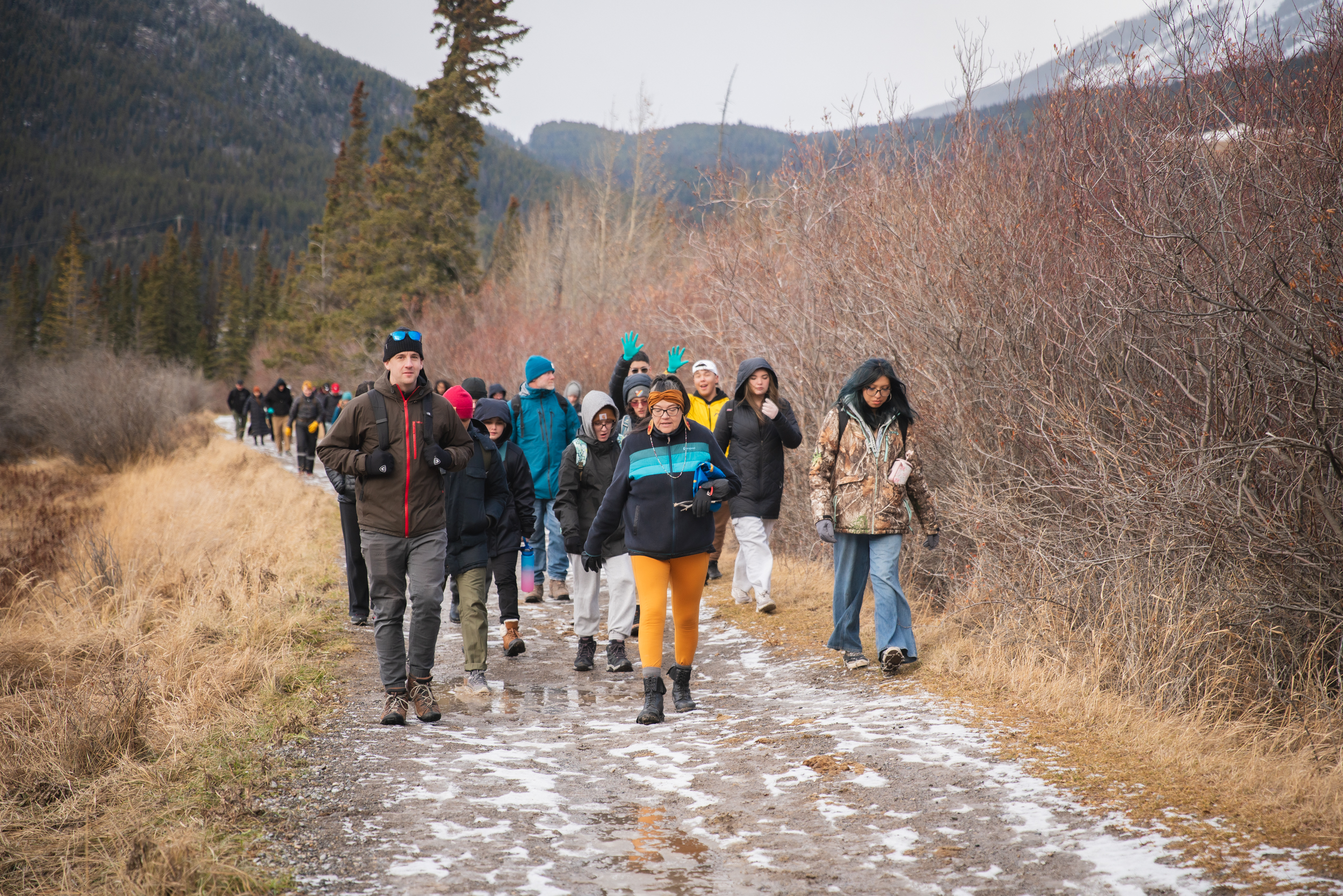
Braiding Knowledges Canada (BKC) is pleased to announce the selection of 15 Land-Based Learning (LBL) initiatives from across Canada for the 2026–27 funding period. Chosen through a national call for proposals, these projects reflect a shared commitment to advancing Reconciliation through Research and strengthening the braiding of Indigenous and Western knowledge systems.
The LBL program remains central to BKC’s mission to nurture emerging leaders and support community-driven learning grounded in culture, language, and land. This year’s selected initiatives highlight diverse approaches to land-based education, with programs taking place in regions including the Great Lakes, Yukon, Quebec, Atlantic Canada, the Prairies, and the Boreal forest.
These initiatives braid Indigenous and Western knowledges, offering Indigenous and non-Indigenous youth meaningful time on the land while honouring Indigenous Peoples’ knowledges, cultures, and languages as essential to deep, place-based understanding. Guided by Elders, Knowledge Keepers, and community mentors, participants will engage in learning experiences that foster mutual understanding, shared responsibility, and respect for the lands and waters.
Across the country, the projects explore themes such as water stewardship, climate monitoring, wildlife conservation, food sovereignty, Indigenous law, cultural revitalization, and environmental leadership, strengthening both community capacity and the next generation of land stewards.
The following Land-Based Learning initiatives have been selected for the 2026–27 funding cycle:
1. Indigenous Great Lakes Network Youth Camp: Our Responsibilities to Nibi
Project Lead: Dr. Barbara Wall
Project Co-lead: Lydia Johnson
The Indigenous Great Lakes Network (IGLN) is launching a land-based youth learning program focused on water (Nibi) and environmental monitoring. The initiative empowers 15 Indigenous youth (ages 18–30) from the Great Lakes region to become leaders in aquatic science and decision-making by braiding Anishinaabe knowledge with technical monitoring practices.
Led by the Indigenous Great Lakes Network and supported by Knowledge Holders, IGLN staff, students and academic scholars the program includes virtual and in-person events hosted at Trent University Campus in Nogojiwanong (Peterborough) Ontario.
Key goals include:
- Braiding aquatic science with Anishinaabe traditional knowledge to inform water governance.
- Training youth in western aquatic science monitoring practices and leadership skills.
- Empowering youth to understand how cultural knowledge can contribute to the health and well-being of the Great Lakes.
- Fostering intergenerational knowledge transfer and youth self-determination through hands-on learning.
2. Sho Than K’e Ho Chi Dok – Summer 2026 Land Camp
Project Lead: Wren Nicolardi
Project Co-lead: Sydney Kuppenbender
Rivers to Ridges is launching a five-day land-based camp grounded in Elder Copper Joe Jack’s Land and People’s Relationship Model. The initiative empowers 20 Indigenous and non-Indigenous youth and community members to become stewards of the land by braiding traditional Yukon Indigenous knowledge with modern environmental leadership skills.
Led by Rivers to Ridges, the program centers on building community and capacity-building through mentorship and cultural immersion.
Key goals include:
- Learning how to engage the practice of “listening to No Voice” to reconnect participants to the Land;
- Learning from Elders how to be on the Land and in good relationship with the traditional stewards of those Lands, of the No Voice who occupy the Lands, and with one another;
- Promoting reconciliation through shared learning between Indigenous and non-Indigenous participants.
3.PISHKAPITKANU E MISHKUTSHIPALIT TSHISHIKU
Project Lead: Mélanie Bellefleur
Project Co-lead: Marie-Michèle Voyer
The Innu Council of Pessamit is launching a climate-focused land-based learning program centered on the territory of Nitassinan. The initiative empowers 40 participants, including a significant youth cohort, to address climate change by braiding Innu traditional knowledge with community-based scientific monitoring.
Led by the Territory and Resources Sector of the Innu Council of Pessamit, the program features a winter 2027 camp where technology meets tradition.
Key goals include:
- Developing a community-based monitoring program specifically for climate change impacts.
- Utilizing the Siku app and modern scientific tools alongside traditional Innu observations.
- Facilitating intergenerational knowledge transfer between Elders and youth on the land.
- Strengthening community autonomy in monitoring and managing ancestral territories.
4. Unama’ki Harvesting Spirit: Indigenous Food Sovereignty on the East Coast
Project Lead: Sarah Prosper
Project Co-lead: George Woodhouse
The Howl Experience is launching Unama’ki Harvesting Spirit, a five-day youth camp focused on food sovereignty and climate action. The initiative empowers 20 Indigenous and non-Indigenous youth to explore sustainable food systems by braiding Mi’kmaq Etuaptmumk (Two-Eyed Seeing) with service-learning and environmental science.
Led by The Howl Experience with support and collaboration from Parks Canada, local Mi’kmaq Elders, and local Indigenous-led conservation organizations, the program centers on hands-on harvesting and ecological stewardship in Unama’ki.
Key goals include:
- Integrating Two-Eyed Seeing into food sovereignty and climate resilience education.
- Developing youth-led service-learning projects that address local environmental needs.
- Creating a collaborative space for Indigenous and non-Indigenous youth to learn from Elders.
- Strengthening the connection between cultural harvesting practices and modern food security.
5. Aapihkayhk Kaayaash Ooschi (Weaving Traditions)
Project Lead: Brenda Genaille
Project Co-lead: Barbara Emmrich
Lesser Slave Lake Métis District is launching Aapihkayhk Kaayaash Ooschi, a week-long land camp focused on cultural revitalization and boreal forest management. The initiative empowers 52 participants, including youth aged 12–29, to reclaim their Métis heritage by braiding traditional skills with modern environmental stewardship.
Led by the Lesser Slave Lake Métis District, the program focuses on traditional harvesting sites and community-led conservation efforts.
Key goals include:
- Revitalizing Métis language and cultural identity through land-based immersion.
- Training youth in traditional hunting, fishing, and medicine harvesting techniques.
- Integrating Métis knowledge into boreal forest monitoring and management strategies.
- Strengthening community bonds through intergenerational learning and cultural celebration.
6. Wlipogwat (C’est bon)!
Project Lead: Edgar Blanchet
Project Co-lead: Denys Bernard
The W8banaki Tribal Council is launching Wlipogwat (C’est bon), a series of seasonal land-based workshops focused on food security and traditional harvesting. The initiative empowers Nation members and youth to revitalize ancestral knowledge by braiding W8banaki traditions with modern nutritional and environmental science.
Led by theGuardians of the Ndakina, the program centers on the seasonal cycles of the Ndakini, the ancestral territory of the W8banaki, also known as the St. Lawrence River and surrounding territories.
Key goals include:
- Protecting and sharing traditional knowledge related to food security and harvesting.
- Developing a series of seasonal workshops led by Guardians and Elders of this First Nation.
- Promoting the health and wellness of the community through traditional food systems.
- Enhancing environmental monitoring of sensitive habitats within the Ndakina territory.
7. 13 Moon Land-Based Learning – Tsitwatasaoha – Where It Begins
Project Lead: Tia Kennedy
Project Co-lead: Dayna McDougall
13 Moon Land-Based Learning is launching Tsitwatasaoha, an urban-focused learning program centred on the Oneida lunar calendar. The initiative empowers urban Indigenous youth and families to reconnect with the land by braiding Oneida language and culture with environmental monitoring and Indigenous science.
Led by Knowledge Keepers Dan and Mary Lou Smoke, the program features monthly youth and family nights that follow the natural cycles of the 13 moons.
Key goals include:
- Providing Oneida language immersion through land-based cultural teachings.
- Utilizing a traditional lunar calendar to guide environmental monitoring and activities.
- Building a supportive community for urban Indigenous youth and their families.
- Restoring Indigenous scientific knowledge through seasonal observations and ceremonies.
8. Bimaadiziwin on the Land: Whitefish River First Nation Indigenous Science Learning Program
Project Lead: Keith Nahwegahbow
Project Co-lead: Dr. Deborah McGregor
Whitefish River First Nation (WRFN) is launching Bimaadiziwin on the Land, a sustainable Indigenous science camp program for youth. The initiative empowers WRFN youth to become environmental leaders by braiding Anishinaabe Seven Grandfather teachings with modern technical skills in water and land monitoring.
Led by the WRFN Lands Department, the program utilizes community territory as a living classroom for ecological research and cultural transmission.
Key goals include:
- Establishing a permanent land-based science camp for long-term youth engagement.
- Training youth in shoreline monitoring, water sampling, and medicine identification.
- Braiding Anishinaabe worldviews with Western scientific data collection methods.
- Advancing community self-determination through youth-led environmental monitoring.
9. Asemaa (Tobacco) Camp – Deepening Traditional Teachings and Bundles for Our Future
Project Lead: Mandi Olson
Project Co-lead: Lori Flinders
Binesiwag Center for Wellness is launching Asemaa Camp, a wellness-focused land-based program for Indigenous youth. The initiative empowers youth to build personal and community resilience by braiding traditional tobacco teachings with contemporary health research and environmental stewardship.
Led by the Binesiwag Center for Wellness in the Rainy River First Nation, the program focuses on the holistic connection between the health of the land and the health of the people.
Key goals include:
- Deepening youth understanding of traditional medicines and sacred bundles.
- Integrating cultural wellness practices with community-led environmental research.
- Facilitating intergenerational mentorship between Elders, healers, and youth.
- Creating a safe, land-based environment for healing and leadership development.
10. The Anishinaabe Law Camp
Project Lead: Lindsay Borrows
The Queen’s University Faculty of Law is launching a three-year Anishinaabe Law Camp program. The initiative empowers law students and Indigenous youth to understand legal systems by braiding Anishinaabe legal orders and stories with Canadian environmental law and international human rights frameworks.
Led by Indigenous legal scholars and local Knowledge Keepers, the four-day camps take place on the land to ground legal theory in ecological reality.
Key goals include:
- Teaching Anishinaabe law through land-based immersion and oral traditions.
- Braiding Indigenous legal perspectives with UNDRIP and environmental policy.
- Building relationships between future legal professionals and Indigenous youth.
- Analyzing the role of the land as a source of law and governance.
11. Empowering Indigenous Youth for Woodland Caribou and Boreal Wildlife Monitoring
Project Lead: Md Adbullah Al Mamun
Project Co-lead: Robin McLeod
The Prince Albert Grand Council is launching a wildlife monitoring initiative in the Reindeer Lake region. The initiative empowers Cree and Dene youth to become “Snowball Mentors” by braiding Traditional Ecological Knowledge (TEK) with scientific caribou monitoring techniques.
Led by community leaders and wildlife experts, the program focuses on the protection of the woodland caribou and the boreal ecosystem.
Key goals include:
- Training youth in field-based monitoring of woodland caribou and boreal wildlife.
- Implementing a “snowball” mentorship model where trained youth teach their peers.
- Braiding Cree and Dene TEK with Western wildlife biology and GPS tracking.
- Supporting community-led conservation efforts through data collection and youth leadership.
12. Blackfoot Traditional Knowledge and Monitoring Program for Youth
Project Lead: Disa Crow Chief
Project Co-lead: Kerry Black
The Blackfoot Youth Water Council is launching a yearlong water-monitoring program rooted in Siksikaitsitapi values. The initiative empowers Blackfoot youth to protect their watersheds by braiding traditional Blackfoot knowledge with modern water-sampling and laboratory analysis protocols.
Led by the Blackfoot Youth Water Council and supported by Elders, the program focuses on building trust in local water systems and environmental health.
Key goals include:
- Establishing a formal Blackfoot Youth Water Council to lead community monitoring.Training youth in CABiN (Canadian Aquatic Biomonitoring Network) protocols.
- Braiding Blackfoot stories and place-names with scientific water quality data.
- Informing local water management through youth-led research and Elder guidance.
Learn more about Marine Plan Partnership for the North Pacific Coast (MaPP), a supporting partner in this project, and to learn more about all the work Ha-ma-yas Stewardship Network are doing in MaPP with the member First Nations.
13. Ulnooweg Seasonal Youth Camps Program
Project Lead: Denise Whynot
Ulnooweg Education Centre is launching a comprehensive seasonal camp program across Wabanaki territory. The initiative empowers Indigenous youth in the Atlantic region to become champions of their environment by braiding Mi’kmaw and Wolastoqey knowledge with STEM-based environmental learning.
Led by Ulnooweg and partner organizations, the program delivers multiple camps throughout the year to ensure continuous engagement with the land and seasons.
Key goals include:
- Delivering seasonal land-based education in Nova Scotia and New Brunswick, accessible to Indigenous youth living across the Wabanaki Confederacy.
- Braiding Indigenous science and traditional knowledge with modern STEM concepts.
- Building a network of Indigenous youth leaders across the Atlantic provinces.
- Providing transformational educational experiences that promote cultural pride and stewardship.
14. Imalirijiit – Building on a Decade of Land-Based Learning to Develop Training Pathways
Project Lead: Alexandre Roy
Project Co-Lead: David Annanack
The Science and Culture Landcamp Program is a community-based initiative that brings together youth, Elders, knowledge holders, researchers, and local partners to strengthen environmental stewardship, cultural knowledge transmission, and land-based learning. Through Science and Culture landcamps, paid training opportunities, and internship pathways, the program supports youth engagement in environmental sciences while fostering connections to traditional knowledge, community leadership, and future employment opportunities.
Key goals include:
- Deliver Science and Culture land camps that braid environmental science with land-based cultural learning.
- Promote environmental stewardship, conservation practices, and access to traditional knowledge and skills.
- Facilitate knowledge sharing among Elders, youth, researchers, and community members.
- Develop flexible, paid training opportunities that support youth participation in land-based monitoring and environmental activities.
- Establish internship and employment pathways through partner organizations.
- Recruit and support youth champions who can serve as leaders within their communities.
15. Loxiwe (Clam Garden) Restoration
Project Lead: Scott Harris
Project Co-Lead: Zander Chila
The Loxiwe (Clam Garden) Restoration and Shellfish Safety Initiative is a collaborative project led by Nanwakolas Council Society in partnership with the Knowledge Holders of We Wai Kai First Nation and the five Nanwakolas member Nations. The project aims to revitalize traditional clam gardening practices by restoring loxiwe (ancient clam gardens) and developing rapid shellfish testing methods that Indigenous Guardians can use to assess shellfish safety for community consumption.
By braiding Indigenous knowledge systems, stewardship practices, and scientific expertise, the initiative addresses food security, climate change impacts, shellfish safety, and marine ecosystem restoration. The project also supports the implementation of Indigenous marine plans while strengthening the transmission of cultural knowledge, environmental stewardship, and community capacity.
Key goals include:
- Restore traditional loxiwe (clam garden) sites through Indigenous-led stewardship and management practices.
- Develop and test rapid shellfish assessment methods that support safe community harvesting and consumption.
- Strengthen food security and community access to safe, culturally important foods.
- Support Indigenous Guardians in monitoring and managing shellfish harvesting areas.
- Facilitate collaboration among Knowledge Holders, researchers, health authorities, governments, and marine stewardship organizations.
- Revitalize and transfer traditional ecological knowledge related to clam gardens and sustainable marine resource management.
- Advance reconciliation by supporting Indigenous rights, stewardship responsibilities, and access to traditional food systems.