

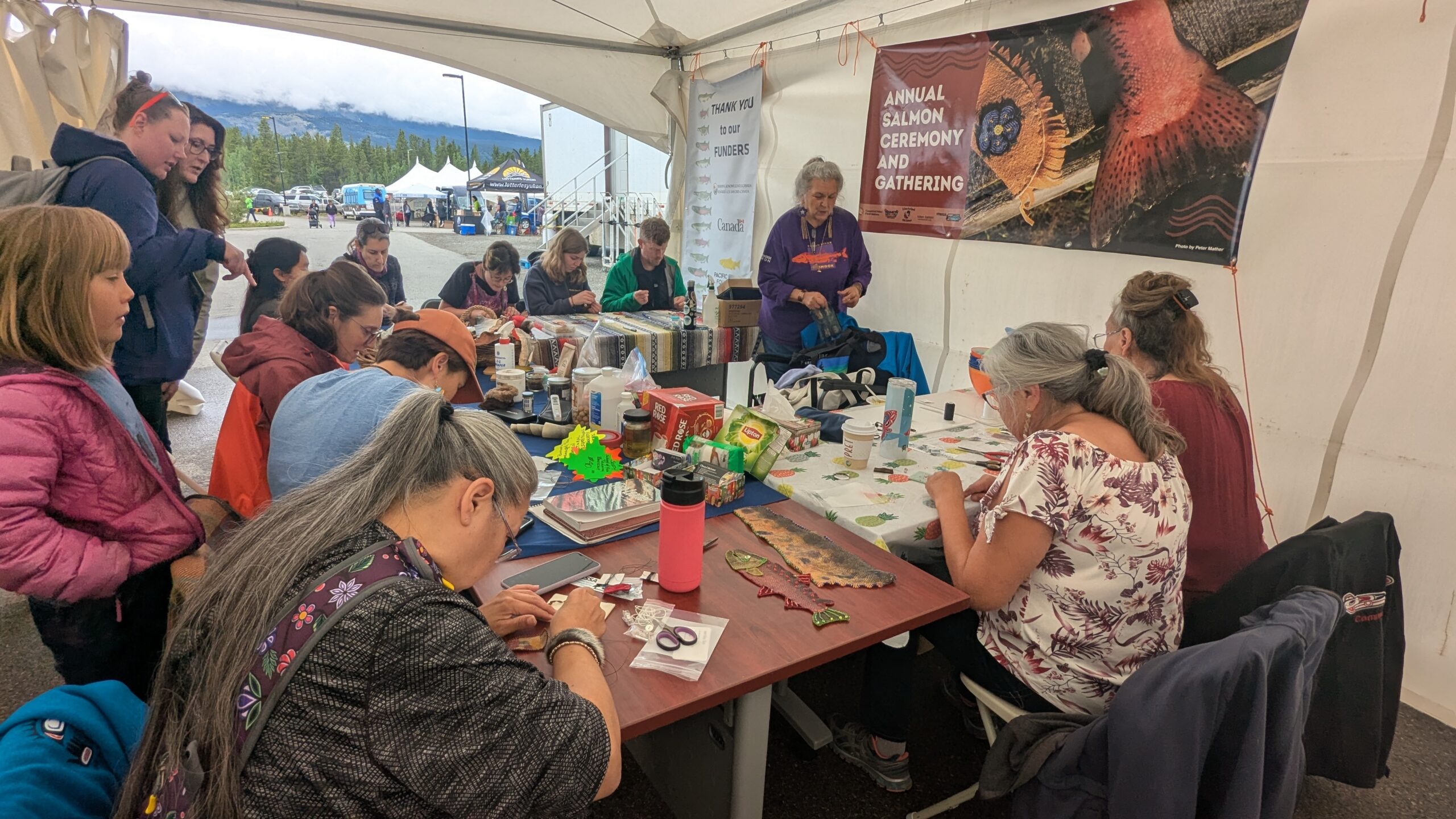
Fish Leather Workshop at the Annual Salmon Ceremony and Gathering, Salmon Knowledge Hub.
The recent announcement of Canada’s 2030 Nature Strategy, “A Force of Nature”, lays out a path for Canada to achieve the 30×30 goals and targets of the Kunming-Montreal Global Biodiversity Framework. The Strategy highlighted Indigenous leadership and Indigenous-led conservation as fundamental to the Strategy and the importance of working alongside Indigenous Peoples to protect and conserve nature from coast to coast to coast.
Braiding Knowledges Canada (BKC) is a not-for-profit organization with funding from the Strategic Science Fund that supports Indigenous leadership and enabling Indigenous-led and co-led research, training and knowledge mobilization efforts across Canada in conservation, environmental protection and climate adaptation.
BKC’s efforts are not only aligned with the Nature Strategy, but they are delivering on the ground, braiding Indigenous and place-based knowledge with Western scientific methods to generate reciprocal outcomes for people and the environment.
Supporting and enabling Indigenous leadership, Indigenous-led conservation efforts and Guardians is critical to the success of the 2030 Nature Strategy. While working alongside Indigenous Peoples is critical, BKC advocates for the co-creation of knowledge, grounded in place, through the braiding of Indigenous and Western Knowledges. Braiding leads to strong and sustainable outcomes to inform better decision-making.
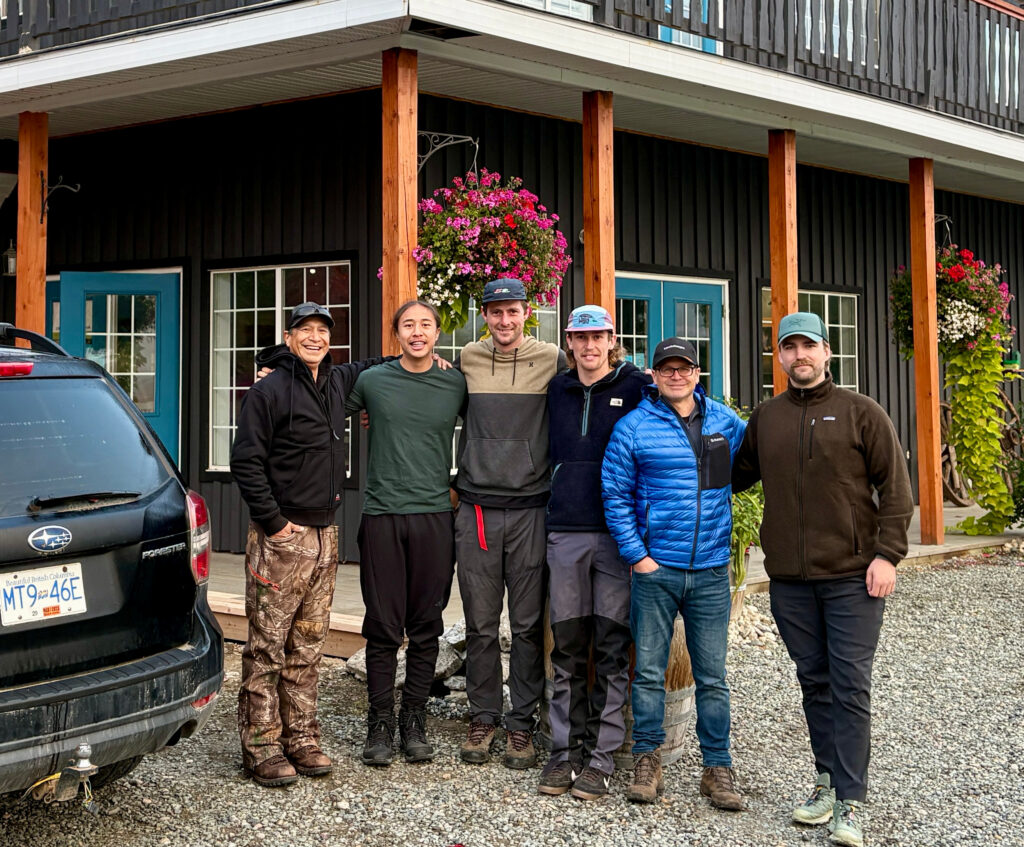
Beyond Values, BKC and the Nature Strategy Share Commitments
Integral to the Strategy is a commitment to protecting nature through prioritizing Indigenous-led stewardship and supporting Indigenous Protected and Conserved Areas (IPCAs).
This is important news for the BKC-funded IPCA Innovation Centre Network, as it raises public awareness of IPCA’s, and the measurable impact on creating generational solutions to complex environmental and cultural issues.
Led by the IISAAK OLAM foundation and Vancouver Island University, the IPCA Innovation Centre Network is working with Indigenous Nations, academic institutions, NGOs, and other partners to support community-driven IPCA initiatives. This BKC-supported Knowledge Hub is working to create a national network of regional IPCA innovation centres, rooted in Indigenous leadership, and responsive to local needs, building on the success of the Pacific IPCA Innovation Centre.
We are encouraged to see federal actions supporting IPCAs, as increased capacity building and work experience will strengthen outcomes for IPCAs across the country while broadening national understanding of their impact.
Indigenous Guardians Programs
The Nature Strategy has also committed $231 million over five years to enhance Indigenous Guardians Programs, including establishing a new Arctic Indigenous Guardians Program.
A strong and prosperous Canada depends on protecting, restoring, and valuing nature through the braiding of Indigenous and Western knowledge systems. This is only possible when Knowledge systems are respected in an equitable manner. Elevating Indigenous knowledges that have been undervalued in Canada is critical. Investment in training, capacity building, and development of Indigenous leaders, including Indigenous Guardians is essential. BKC supports significant training and capacity building programs and pathways for youth, students and established Indigenous leaders including Guardians. These opportunities provide professional experience in braided research, environmental monitoring, and land-based learning to help build the next generation of leaders working through a braided approach.
“There is no path to 30X30 without Indigenous leadership and the Government of Canada is committed to working alongside Indigenous Peoples. Indigenous-led conservation is and will continue to be foundational to our collective effort to protect and conserve nature.”
Cultural Mapping and Building Canada Well
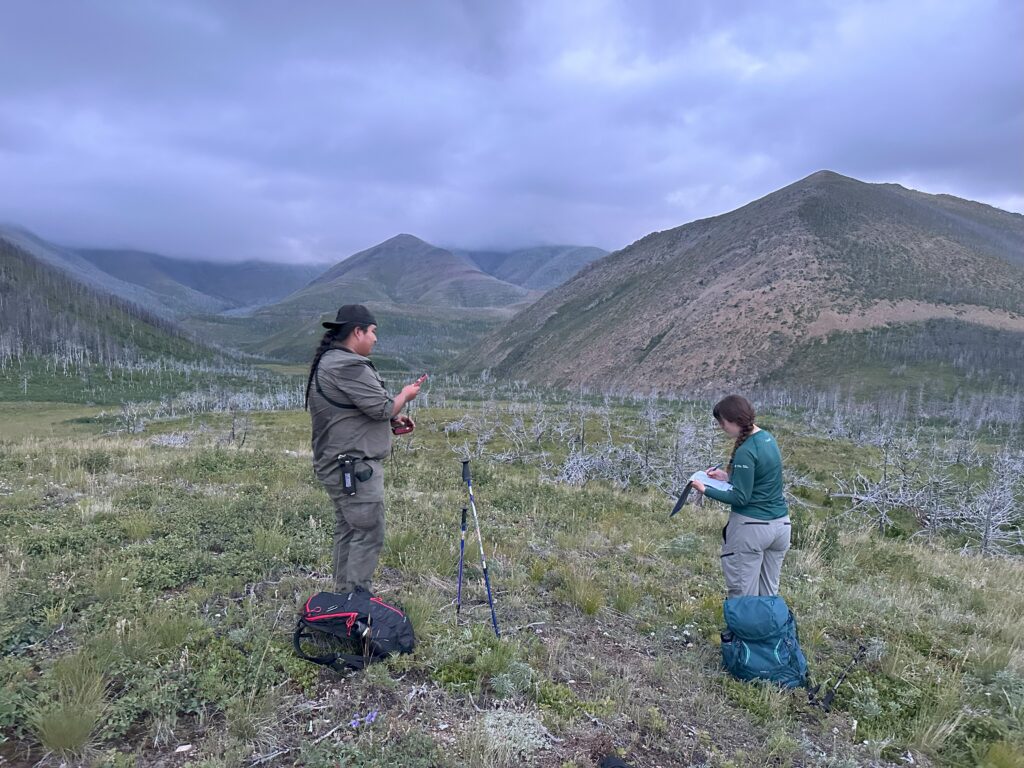
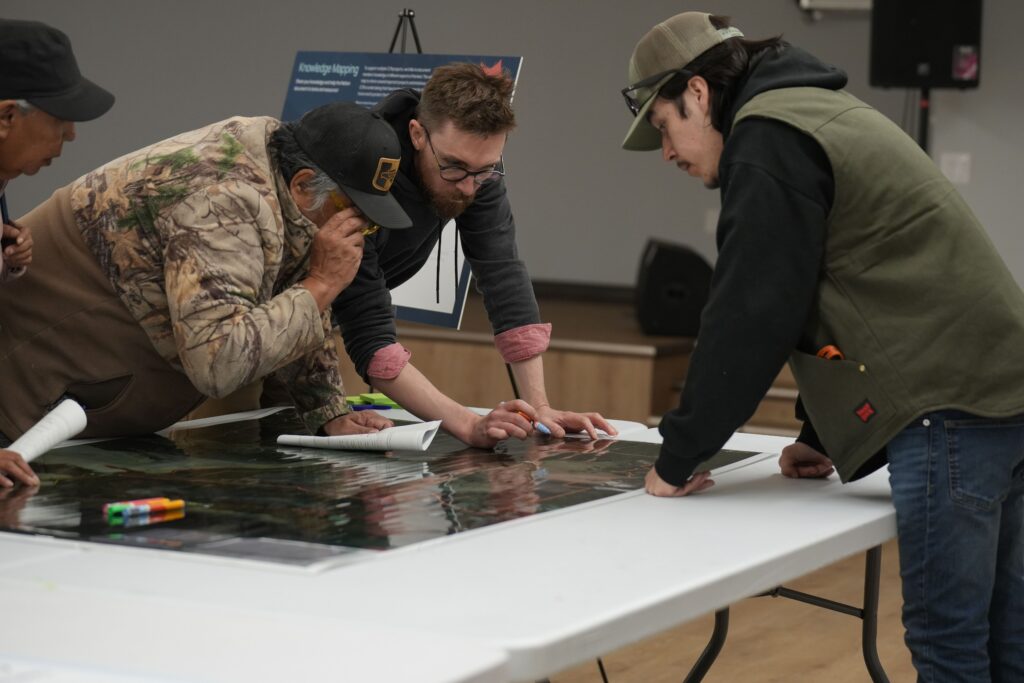
An important example of BKC-funded land Guardians work in action can be seen in the Chemawawin Cree Nation’s Guardians Program. Their project objectives include creating digital and physical maps braiding traditional Cree place names, while noting ecological events and monitoring species at risk, making that information accessible for land-use planning, education, and cultural awareness initiatives. These maps will influence the development of the Cedar Lake Resource Management Area Land Use and Resource Management Plan, ensuring Indigenous knowledge informs land stewardship policies.
The Nature Strategy states that building Canada well means designing infrastructure and economic prosperity in ways that work with nature, not against it, and proposes using data and mapping to identify key biodiversity areas and species at risk, helping to improve project planning and permitting decisions.
Maps that identify key ecological areas while integrating Indigenous place-based knowledge not only inform policy and decision-making, they can also serve as living tools that reinforce cultural identity and support intergenerational knowledge sharing, leading to better outcomes for both people and the environment.
Knowledge to Action: Outcomes Matter
The priorities outlined in Canada’s 2030 Nature Strategy are ambitious and require time, awareness, and a sustained commitment to building long-term relationships. They need to be grounded in current realities while leveraging existing success stories, relationships and lessons learned.
BKC has been advancing these priorities for many years. Cumulative effects assessment, protection and conservation of species at risk, and IPCAs are just a few of our impact areas. Our impact and learnings on the braiding of knowledge systems, governing together in a good way, uplifting Indigenous knowledge systems and voices for a stronger, more prosperous Canada align with the ambitious Nature Strategy. Our efforts are based on the principle that nature is a living system that sustains communities, cultures, and well-being; that lasting change depends on trusted relationships; and that better decisions emerge when local and place-based knowledge informs public policy.
We are inspired to see the federal commitment to Indigenous leadership in Canada’s Strategy to Protect Nature, bringing greater visibility and national understanding to the ethical frameworks and strategic vision that underpin this work. BKC advocates for the braiding of knowledges to advance better research, science, knowledge generation and to ultimately make better decisions for Canada and Canadians.
Consultants and policy advisors work in environments where credibility, context, and implementation matter. In this video, hear from Dr. Monique Dubé, Executive Director of Braiding Knowledges Canada and Hereditary Chief Phil Lane Jr. of the Ihanktowan Dakota and Chickasaw First Nation, who speak on the importance of braiding knowledges as a foundation of meaningful and effective decision-making for communities, government and industry.
BKC’s work is supported by a five-year grant (2024–2029) through the Strategic Science Fund Program of the Government of Canada, which funds not-for-profit organizations advancing collaborative research and knowledge mobilization across the country to advance federal science priorities.
Learn more about our work at Braiding Knowledges Canada here.