

Braiding Knowledges Canada is seeking proposals for Knowledge Hubs, Land-Based Learning Programs, and Impact Connectors
In order to advance BKC objectives of:
- Leading in culture through continuously learning and improving our management and governance guided by the collective teachings, values, and principles of our partner Indigenous Nations, the application of the United Nations Declaration on the Rights of Indigenous Peoples (UNDRIP), the Truth and Reconciliation Commission of Canada’s (TRC) Calls to Action, the principles of Equity, Diversity, Inclusion and Justice (EDIJ), and Ethical Space;
- Enabling research that braids knowledges focused on environmental change to inform conservation, restoration, adaptation, and well-being of All Our Relations;
- Mobilizing Indigenous knowledges through knowledge braiding initiatives to advance equity, contribute to self-determination and reconciliation, and initiate transformation in policy and decision-making in Canada;
- Nurturing talent and growing capacity in knowledge braiding across a learning continuum and towards a diversity of leadership pathways and networks;
BKC is accepting proposals, with a November 6, 2026 submission deadline, for knowledge hubs, impact connectors, and land-based learning programs with an anticipated start date of April 1, 2027. Funding can be requested for a single year (2027/28) or for two years (2027/28; 2028/29). This call for proposals is open to currently funded BKC initiatives, whose funding ends this fiscal year, as well as new initiatives not previously funded by BKC .
Knowledge Hubs
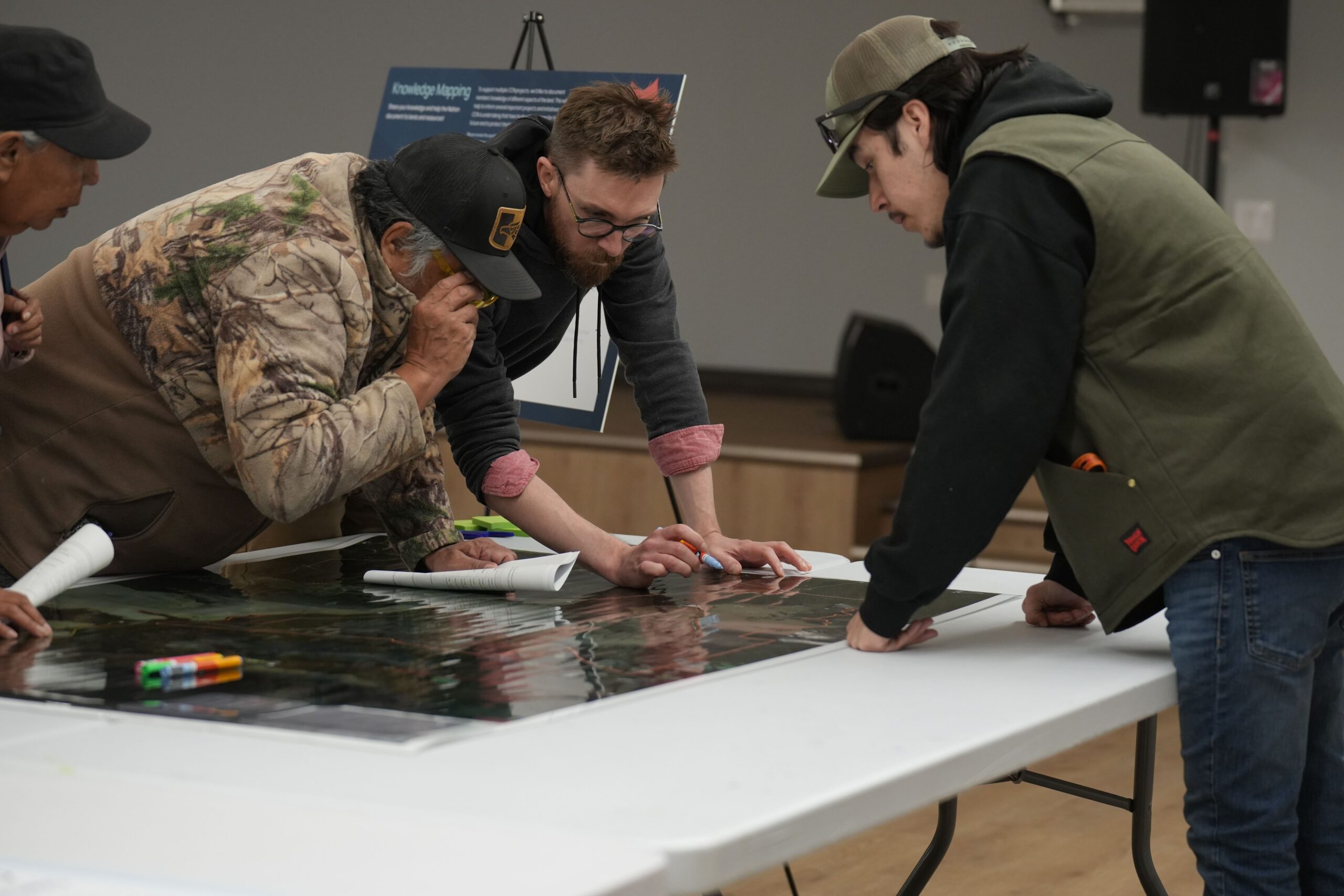
Knowledge Hubs are place-based Indigenous-led or co-led collaborations that include research, training, and knowledge mobilization components that promote conservation, restoration, adaptation, and well-being. Knowledge Hubs:
- Co-produce braided knowledges;engage community members, including Elders, Knowledge Keepers, Guardians, and Youth;
- Strengthen local capacity for research, training, and knowledge-application to empower self-determination among First Nations, Métis, and Inuit peoples; and
- Promote multi-stakeholder and participatory approaches through co-learning and partnerships.
BKC Knowledge Hubs receive a maximum of $125,000 CDN per year.
For information, previously funded BKC Knowledge Hubs can be found here.
Land-Based Learning Programs
BKCs Land-Based Learning (LBL) program supports immersive urban, rural, or remote learning camps that involve youth and have an emphasis on the braiding of knowledges. Land-based learning programs provide an immersive and transformative educational experience that strengthens connections with Indigenous ways of knowing while weaving together Indigenous and Western knowledges to foster intercultural competencies and creates improved understanding. Initiatives should prioritize land-based learning and knowledge braiding, while learning place-based knowledge from Elders, knowledge holders, and researchers to equip youth with essential skills for personal development, career advancement, and successful employment transitions. BKC welcomes applications from First Nation, Inuit- and Métis-led initiatives from across Canada, including, but not limited to, initiatives focused on urban youth and non-traditional land-learning environments.
BKC Land-based Learning Camps receive a maximum of $75,000 CDN per year.
For information, previously funded BKC LBL Programs are described here.
Impact Connectors
BKC’s Impact Connector initiatives mobilize braided knowledges and advance policy and decision-making. Impact Connector Initiatives provide a platform for place-based knowledges and initiatives to impact provincial, territorial, and national outcomes as well as for regional-to-national initiatives to achieve meaningful local-level involvement, support, and impact.
BKC Impact Connectors receive a maximum of $75,000 CDN per year.
For information, previously funded BKC Impact Connectors can be found here.
Eligibility & Key Dates
Applicants may apply for one (2027/28) or two years of funding (2027/28 and 2028/29).
Previously funded applicants may apply.
Funding Period One Year: April 1, 2027 – March 31, 2028
Funding Period Two Years: April 1, 2027 – March 31, 2029
Organizations eligible to hold BKC funds include: Indigenous governments and organizations, co-management organizations, non-profits, charities, hospitals, municipalities, and academic institutions.
For further details on eligibility, matching funds, etc., please refer to the most recent Strategic Science Fund Program Guide here.
Budget Considerations
BKC welcomes proposals with the following estimated costs:
- Knowledge Hubs: maximum of $125,000 CDN per year
- Land-Based Learning Programs: maximum of $75,000 CDN per year
- Impact Connectors: maximum of $75,000 CDN per year
A maximum of 15% overhead per year is permitted. Applicants must provide matching funds of a 1:0.8 ratio (i.e., 80% of the budget must be matched from non-federal sources, including both cash and in-kind contributions). For example, if the applicant applies for $50,000 CDN from Braiding Knowledges Canada, they must also outline the source and amount of at least $40,000 in cash or in-kind contributions as a match. Additional guidelines for matching can be found here.
Ineligible costs include:
- Costs associated with the construction of, or major renovation to building and structures;
- The purchase or lease of land;
- Flat-rate charges for overhead costs (indirect costs); and
- The acquisition of major research equipment (with a net federal cost above $250,000).
Successful applicants and/or members of their team are required to attend BKC’s Gatherings in early 2028 (for funding received in 2027/28) and in early 2029 (for funding received in 2028/29). Attendance at the Gathering is a requirement of funding, and travel, accommodation, registration and other related conference attendance costs must be included in submitted budgets.
Conditions of Funding
- Execute and comply with the BKC Ultimate Recipient Agreement (URA)
- Attend BKC’s Knowledge Gathering(s)
- Meet with the BKC team periodically for update meetings
- Submit yearly Interim and Annual reports complete and on time, which include budget expenditures
- Work with BKC’s Communication team to advertise, announce or highlight activities
- Include BKC logos and/or citations to acknowledge funding support by BKC in oral and written communications.
Application Process and Adjudication of Proposals
Applicants will submit their proposal using the online form. Proposals must indicate which of the three possible funding streams they are applying to and how their proposal meets the objectives of that funding stream. Proposals will be evaluated based on how the proposed initiative meets BKC’s following adjudication criteria:
- Braiding of Knowledges
- All Our Relations
- People of Place
- Mutual Benefits
- Recognition of Gifts
Additional proposal sections assess the project’s potential Environmental Impact, Knowledge and Technology Transfer, Feasibility of Implementing the Proposal, and potential contributions to Federal Science Priorities.
Adjudication of proposals will be according to BKC’s Project Review, Funding and Appeals Policy. If you have any questions or need assistance, please contact kirsten@braidingknowledges.ca
Submit your proposal by completing BKC’s Universal Proposal Template Form.